
But alas! What poor Woman is ever taught that she should have a higher design that to get her a husband? (Mary Astell)
The eighteenth century was a time of numerous beliefs, class and social standards. It was a time when men ruled and women followed. Finding a good husband should be a woman’s main concern and having “wit” made you unfit for a good wife. These are small examples of life in the eighteenth century. The above comment by Mary Astell sheds some light into not only the expected behaviour women, and what kind of beliefs they were raised with, but also their way of thinking in the eighteenth century. Eliza Haywood’s “Fantomina”, (Haywood, Eliza. Fantomina: Or Love in a Maze. 1725), and Mary Astell’s “A Serious Proposal to the Ladies”, (Astell, Mary. A Serious Proposal to the Ladies, for the Advancement of their true and greatest Interest. 1694), are two texts that portray both a challenging and confirming theory to the comment.
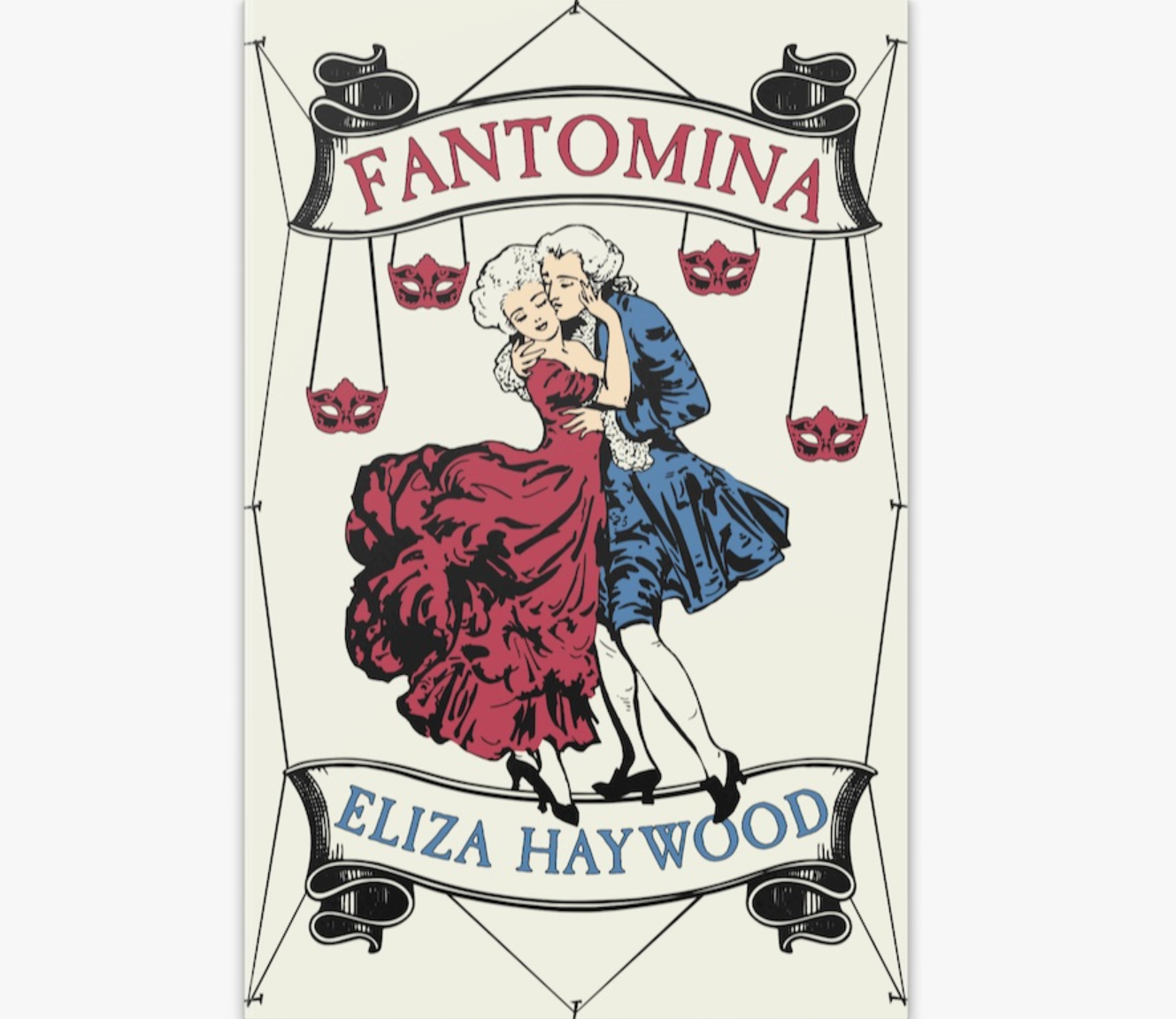
“Fantomina” by Eliza Haywood, (Haywood, Eliza. Fantomina: Or Love in a Maze. 1725), raises questions about whether the statement at hand a true interpretation of would be eighteenth century women. The protagonist in the text, or Fantomina as many refer to her as, was a smart and beautiful young woman. But she had “wit”, which men did not believe was a good thing for a woman to have. It made them unfit and troublesome as wives as it brought them to an equal level to men. Laetitia Pilkington touches on the subject in her “Memoirs”, (Pilkington, Laetitia. Memoirs), when she says, “Clever women are disliked more because it sets them too much upon a level with their Lords and Masters.” This means that the protagonist did not fit the description of a good match for men, therefore disagreeing with the Mary Astell’s comment as it states that women do not think about much in life but to look beautiful and making sure they find a good, reliable husband. Any woman that did not concern herself with that as her main goal in life was thought to have wit and would never find a good husband, which certainly would not be in accordance with the statement. Laetitia Pilkington also touches on that in a continuation of the above quote when she said, “This is why men choose for mates the most illiterate and stupid of the sex, they bless their stars that their wife is not a wit.”, (Pilkington, Laetitia. Memoirs). The text also further challenges the statement because the protagonist, or, Fantomina actually successfully fooled, a rich, high class and well-respected man. She tricked Beauplaisir numerous times which highlights her intelligence and how committed she is. Fantomina’s interest in the way men behaved towards the prostitutes in the play shows ever further her uniqueness. She was disgusted at the transition they could make from one minute being a pleasant, respected man to thirsty dogs. Her knowledge and innocence made her unique but her curiosity in this case did her no favours.“This excited a Curiosity in her to know in what Manner these Creatures were address’d:– She was young, a Stranger to the World, and consequently to the Dangers of it.”, (Haywood, Eliza. Fantomina: Or Love in a Maze. 1725. 4th sentence.) It is also mentioned in the beginning of the story that she was raised in the country, and would have, therefore, been raised with the idea to find a good husband who could give her a good life as well a good family name. The fact that Fantomina ignored these morals that she was taught from a young age and accidentally found herself with a bastard child once again proves the statement to be inaccurate. Despite amusing herself at a man’s expense, Fantomina admits being in love with Beauplaisir towards the end. When you analyse the situation, it can be theorised that possibly this had been the protagonists plan all along. Her many faces were but a way for her to spend more nights with this man despite him having previously raped her. This proclaims that in a subconscious way, Fantomina was attempting to get herself a good husband. She may have not begun with this intent as she was mainly curious as to what response she would get from her disguise, but something about a wealthy Beauplaisir drew her in, confirming the above comment about eighteenth century women to be true, as she was possibly doing what she was raised to believe she should do, but maybe not in the best way. Her unplanned pregnancy and her mother’s reaction to the pregnancy further backs up the point as it is proof that Fantomina was raised to find herself a good husband with a good name, not have an illegitimate child. “Her Mother was involv’d in; when she, covering herself with the Cloaths, and ready to die a second Time with the inward Agitations of her Soul, shriek’d out, Oh, I am undone! – I cannot live, and bear this Shame!”, (Haywood, Eliza. Fantomina: Or Love in a Maze. 1725). Having a bastard child in the eighteenth century was not exactly socially accepted and it most likely brought shame and embarrassment on the family name. This illustrates the way women thought in the century; as well as men, and that women must have certain standards, as it is the woman that is blamed for the pregnancy, whilst Beauplaisir has nothing said about him and the protagonist is sent away. This further shows the statement to be true as the woman was the culprit of her own rape.
“A Serious Proposal to the Ladies” by Mary Astell, (Astell, Mary. A Serious Proposal to the Ladies, for the Advancement of their true and greatest Interest. 1694), the text to which this statement belongs to, talks about an institution or a coventry that women could attend to become smarter. Astell was thought to be one of the first feminist writers and she believed women should want to expand their knowledge in order to make more of a contribution to society, otherwise she feared women would never have control over their lives and that men would slowly gain more and more power over the way things were in terms of society. She wanted women and men to be considered equals. But most importantly she feared not having a place at God’s side, she felt women needed to be smarter in order to gain God’ respect. According to some of her statements in the text, women should only concern themselves with devoting their lives to God and Christianity and live as Eve did. Furthermore, Astell believed that women had to stop constantly fretting about how they looked and what men thought of them, they should want to be educated and think for themselves. “Your glass will not do you half so much service as a serious reflection on your own minds.”, (Astell, Mary. A Serious Proposal to the Ladies, for the Advancement of their true and greatest Interest. 1694. Narrator. Part 1). This confirms the above comment, because whether Astell liked it or not, this is how women thought, they would spend hours in front of the mirror making themselves look beautiful rather than concern themselves with what is going on in the world. Mary Astell wanted women to become more than just nuns or housewives, she wanted them to become important and respected for their intelligence not frowned upon and she didn’t understand why other women didn’t think as she did. “For since God has given women as well as men intelligent souls, why should they be forbidden to improve them?”, (Astell, Mary. A Serious Proposal to the Ladies, for the Advancement of their true and greatest Interest. 1694. Narrator, Paragraph 4). Other poets and writers from the eighteenth century responded to this text by Mary Astell. One of her biggest admirers, in a sense, was Daniel Defoe. In Defoe’s book “An Essay upon Projects”, he briefly comments on Astell’s idea of the academy for women, he believed that men should want to look after women, “breed” them, to make them of more use, in order for them to be less vain and more concerned with entertaining their men. Whilst Defoe may have had good intentions, his idea for the academy is ever so twisted in the eighteenth-century way of thinking. He did not want women to become smarter for themselves, but to be of a more benefit to men, which further confirms the statement yet again to be accurate. To elaborate, Defoe was not the only famous writer to comment on the behaviour of women in the eighteenth century. Alexander Pope also made a brief reference to the matter in one of his poems “Epistle to a Lady”, stating that “Most women have no characters at all…”, (Defoe, Daniel. Epistle to a Lady. 1743). This in addition confirms yet again the comment to be true, as even some of the most famous eighteenth century writes believed women were stupid. The text was most definitely a stepping stone in the right direction for women, although unfortunately it’s not very well known, which means that it is likely the message that Astell was trying to get across was not received at the time, which in it’s own way further confirms the statement, because if more women had thought as Astell did, this would have been a book they would have want to read.
To conclude both texts both, confirm yet challenge the comment made by Mary Astell on the beliefs and expectations of eighteenth-century women. We can see from these texts that changes in society at the time were starting to arise, but the century was not ready for these changes. To finish off I will leave you with this quote from Jane Austen about women in the eighteenth century which is relevant to what we have just discussed. “A lady’s imagination is very rapid; it jumps from admiration to love, from love to matrimony in a moment” (Austen, Jane).
Bibliography:
- (Haywood, Eliza. Fantomina: Or Love in a Maze. 1725. Secret Histories, Novels, and Poems. 1693-1756) (ENG202: Eighteenth-Century Studies, Blackboard, September 2016) http://digital.library.upenn.edu/women/haywood/fantomina/fantomina.html
- (Astell, Mary. A Serious Proposal to the Ladies, for the Advancement of their true and greatest Interest. 1694) (ENG202: Eighteenth-Century Studies, Blackboard, September 2016)
- (Pilkington, Laetitia. Memoirs) (ENG202: Eighteenth-Century Studies, Blackboard, September 2016)
- (Defoe, Daniel. Epistle to a Lady. 1743) (ENG202: Eighteenth-Century Studies, Blackboard, September 2016)
- (Austen, Jane) http://www.quotesea.com/quotes/author-category/18th-century-english-people