
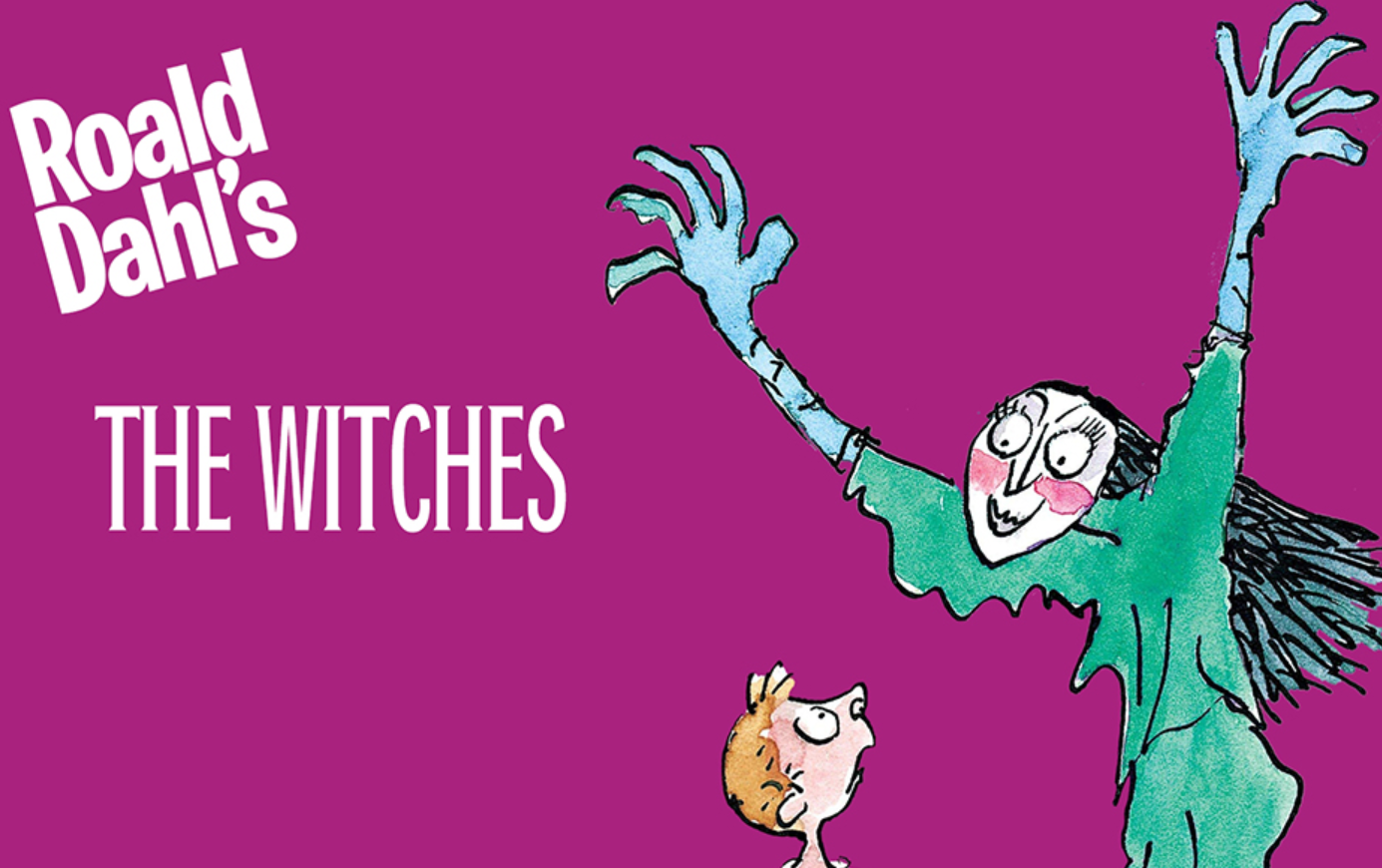
What message do ‘The Witches’ and ‘Holes’ convey about ethics? What does the young reader learn or possibly question about commendable behaviour?
Young readers have impressionable minds. As they are growing and developing, they long for a better understanding of life and guides for what are considered to be important moral principles. As a parent, brother or sister, or even a babysitter, it can sometimes be difficult to communicate significant ideals of morality to an adolescent or a child. This is because they can sometimes want this communication to come from someone the can relate to. Books aimed at these young readers are a perfect way in which we can covey moral principles and what sort of behaviours are to be praised. ‘The Witches’ by Roald Dahl and ‘Holes’ by Louis Sachar, are just two novels which brilliantly carry many of these.
‘The Witches’ is aimed at a younger audience, but there is plenty of entertainment for all age groups. When discussing the topic of ethics within the novel, the first quote that struck me as being of compelling importance was what the Boy says to his Grandmother, after she asks him if he is upset that he will be a mouse forever, ‘It doesn’t matter who you are or what you look like, so long as you have somebody who loves you’. (p.190) This quote is a powerful message to everyone, no matter what age. It highlights how important and how powerful the presence of love is in our lives, and the fact that it is coming from the Boy, presents the young reader with that relatability that they seek. Because it is a child speaking, the child hearing or listening will comprehend the quote as something to be believed and adapted. Hence, the young reader begins to understand the significance of someone’s love. Not only this but, the quote also presents the message that appearances are not as meaningful as love. Allowing a possibly self-conscious young reader to feel some sort of ease.
Despite the messages of moral principles of ‘The Witches’ being applaudable, there is uncertainty on whether the same could be said for what kind of behaviour it commends to a young reader. A lot of this uncertainty revolves around the character of the Grandmother. The Grandmother allows for the grandson to put himself in many dangerous situations which, realistically, any parent or grandparent would be hysterical about in real life. The main issue, however, that sticks out is when the Boy says that by the time he reaches old age as a mouse, they can die together, to which the Grandmother replies ‘That would be perfect’. (p.189) Having only ever read this novel from an adult perspective, this aspect really unsettled me. It seems quite grim that the Grandmother would be content with her grandson, who is a mouse, only living nine more years and then dying when she does. Anyone that has been a parental figure to a child would want them to live a long happy life, filled with joy and exciting experiences. Young readers would surely question this aspect of the novel, as, personally, it is not very commendable behaviour from a grandparent.
Moving on to Louis Sachar’s ‘Holes’, we are presented with a different set of moral principles, which are aimed at more older readers than ‘The Witches’. The main ethics presented to us in the novel are that of perseverance and friendship, more specifically, how endurance pays off, and how you should choose friendship over personal gain. Both of these elements are illustrated through the protagonist, Stanley Yelnats, who transforms from an overweight, cursed, lonely young man, into a person to be admired. The message being conveyed here is that Stanley, who has suffered so much hardship, chose a friend over, helping himself. This is teaching the young reader to choose to be selfless over selfish as it can often be a lot more rewarding. When discussing perseverance, we see how Stanley, who at first seemed daunted by the idea of digging so many holes, motivates himself by remembering when Elya had to carry the pig up the mountain. ‘Every day you will carry the pig up the mountain. It will get a little bigger, but you will get stronger’. (p.31) This is conveying to young readers that to get better at something, you need to practice at it every day; it may seem impossible at first but overtime you will progress.
A vast amount of characters in ‘Holes’ use violence and bullying in order to achieve results. From the novel, the young reader learns that this is not behaviour to be praised upon seeing the fate of the Warden. The Warden believed that ‘If you take a bad boy and make him dig a hole every day in the hot sun, it will turn him into a good boy’. (p.5) She used hard labour, and cruelty as a means of discipline for the boys of the camp, whilst also using them to find the missing treasure. This behaviour is not commendable as it not only inspires feelings of hate and fear in the boys, but also it does not change them into better people, hence, it is a very ineffective form of discipline. The novel is trying to teach readers that bullying and violence is never the answer, in any situation and that most of the time it makes things worse.
To conclude, both novels express undoubtedly important messages, in relation to morals and commendable behaviour, that many young readers could learn from. This makes the books a pleasure to read as there is so much more than the story to enjoy. I also believe that it is of major importance that novels such as these exist, as they allow for young readers to learn so much about important morals and behaviours which are to be adapted or abandoned. Dahl and Sachar are certainly amongst the greatest writers who do this in such a brilliant effortless manner.
Bibliography:
- Dahl, Roald. The Witches. Penguin Random House UK, Puffin Books, 2016. Print.
- Sachar, Louis. Holes. Bloomsbury Publishing London, 2015. Print.