
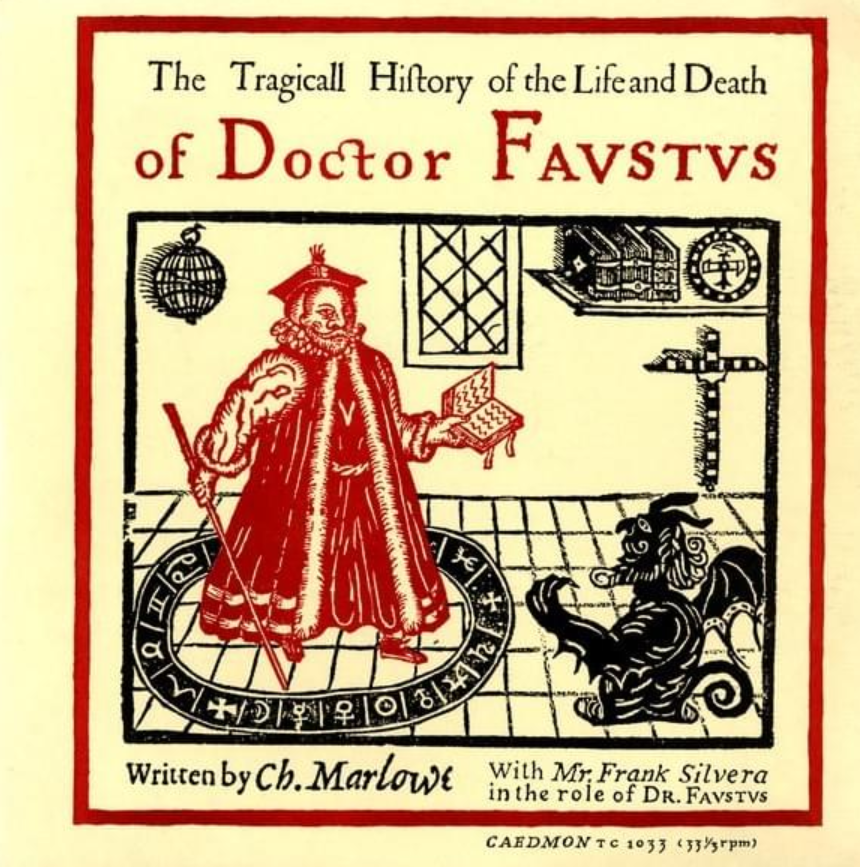
Christopher Marlowe’s “The Tragic History of the life and death of Doctor Faustus”, or more commonly known as “Doctor Faustus”, is a play regarding the thrilling life of the main protagonist, Doctor Faustus. The opening speech of the play provides the audience with great insight to what the play is concerned with and information about the cunning character, that is, Doctor Faustus. The speech is delivered by one known as the Chorus, who briefly explains to the audience that the play is not concerned with the frequent topics of love or war, but in fact the fortunes of Faustus’ life, “Not marching in fields of Trasimene, Where Mars did mate the Carthaginians; Nor sporting in the dalliance of love In courts of kings where state is overturned” (Marlowe,1-4). Those fortunes affect the events that are currently unfolding and how they influence the outcome of the play. Furthermore, the importance of this speech is of high importance to the audience’s first impression of Doctor Faustus.
The opening to this play is one that differs from most other plays from that time period. The Chorus embeds the audience with facts about Faustus, making it difficult for the audience to create their own vision of him. This has an unusual effect on the play, but it is also greatly effective as the audience is encouraged to view Faustus in the way Marlowe intended. Faustus was born into an inferior class family, as we are told by the Chorus, in the small town of Rhode in Germany, “Now is he born, of parents base of stock, In Germany, within a town called Rhode” (Marlowe,11-12). Being born from a poor background possibly influences the actions that he goes on to carry out later in his life. He then moves to Wittenberg to live with his fellow Kingsmen, and it is there that he gains his status of “Doctor” of “Doctor of Divinity”, “Of riper years, to Wittenberg he went, Whereas his kingsmen chiefly brought him up, So much he profits in divinity, That shortly he was graced with doctor’s name” (Marlowe,13-16), which he was crowned with for his great knowledge and ability to discuss theological matters, “Excelling all, and sweetly can dispute; In heavenly matters of theology” (Marlowe,17-18). This gives the instant impression to the audience that Faustus is a well-educated, highly respected and admired man of God. The wisdom and titles of Faustus were incredibly admired and valued during the Renaissance. Furthermore, this impression we get from Faustus is a pleasant one for the audience as it discloses a man who may have struggled for the majority of his youth, yet he still succeeded to achieve the title of doctor.
However, like most great powerful men in the world, Faustus gives into his greed and temptations. He begins to practice necromancy, also known as black magic,“He surfeits upon cursed necromancy” (Marlowe,24). This shows the audience that even the most honoured man can fall into an overwhelming desire for more. In the time of the English Renaissance, the audience would have perceived this as a tremendous betrayal to God, and your soul would be damned for eternity, as religion played an immense part of everyday life. During this period of history, due to the power the Catholic church held over Europe the study and act of Necromancy was considered foul, the art of evil men and women alike and those who practiced it could face a penalty worse than death, a fate Faustus would eventually have to endure. In modern times, however, Faustus would be sympathized with more extensively as a result of the corruption and freedom of religion in the 21st Century. Divulging this information at the beginning of the play presumably resulted in Faustus being thought of as a malignant character, due to the mentality of society in the Renaissance. Most would think that Faustus received his inevitable fate, selling your soul to Lucifer is a sin that can never be revoked, but in the modern day, it would be condescending that any person could be influenced by the allurement of greed for wealth, power and knowledge. Despite this, his wisdom and titles were still respected even after he conferred with Lucifer and his humble servant Mephistopheles. He retained his position in society and remained a strong, intelligent and admired man, and even though he lived a rich life before and after his betrayal to God and his faith, this life was not to last.
To conclude, the opening speech to Christopher Marlowe’s “Doctor Faustus” is one of great importance to the audience, in order to gain a real insight and understanding of the character of Faustus and the events that will be taking place further on in the play. This opening is brilliantly unique as it presents you with a ready-made impression of Faustus, provides you with numerous facts and, additionally, demonstrates the contrast between good and evil in someone’s mind.
Marlowe, C. (2003) Doctor Faustus. London: Penguin Classics.